
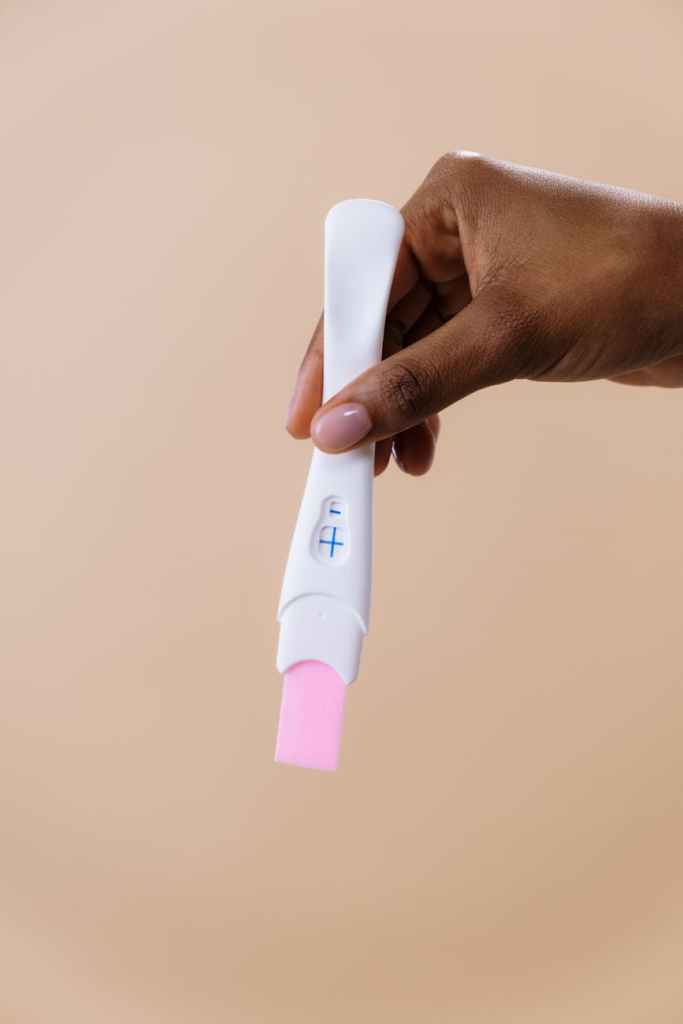
Congratulations! You’re pregnant and now it’s time to start prenatal care. In my first pregnancy, I didn’t know anything about what to expect. I didn’t even know I was supposed to take prenatal vitamins (don’t judge me). It wasn’t until my mom told me about them (not even my provider) that I started taking them. Before your first appointment and honestly when trying to conceive, start prenatal vitamins. I recommend prenatal vitamins with iron and DHA. I often get asked why do I need to take prenatal vitamins and are they safe? Yes, they are safe. Prenatal vitamins contain folic acid which aids in the baby’s spine development and DHA which is beneficial to brain and eye development. Along with many other vitamins to help your immune system, bones, nausea (vitamin B 6), etc. If you are feeling too nauseous or unable to keep foods/fluids in, at least take folic acid alone until you can tolerate prenatal vitamins—it’s a very small pill that can be easily tolerated.
The First Visit (6-9 weeks)
The first visit depends on your clinic, but it is usually between 6-9 weeks of pregnancy. This visit is the pregnancy confirmation/intake visit. In this visit, your medical, surgical, family, and social history is collected. You also get A LOT of bloodwork for this visit, so come hydrated. If you are not up to date on your pap smear, this is also collected at this visit. If you are at least 9 weeks pregnant, you will also be offered genetic testing, which is collected through your blood work. Genetic testing is recommended for patients with family or personal history of genetic disorders and advanced maternal age (35 and over at the time of delivery). However, more insurances are covering genetic testing outside of these factors.
In addition to reviewing your medical history and labs, your provider will also use ultrasound imaging to confirm the due date and assess the viability of your pregnancy. Depending on the capabilities of your clinic, this ultrasound may be performed directly in the office. If your provider’s office does not have ultrasound equipment, you will be referred to a radiology center where the ultrasound will be performed.
**Just as a heads up, it is too early to listen to your baby’s heartbeat with a handheld doppler. The uterus is still inside of the pelvis, so if you hear the heartbeat it would have to be through an ultrasound at this point of pregnancy.
After this visit you are seen every 4 weeks and at each visit you will listen to the heartbeat and eventually the size of your uterus is measured at every visit.
Why do we measure your uterus?
This helps to monitor the growth of the baby. Your uterus should either match exactly or be off by 1-2 cm. For example, if you are 20 weeks pregnant, the uterus should measure 20 cm.
The Second Trimester (14-26 weeks)
Hopefully you are feeling a little better at this point of pregnancy. You will start feeling very light movements called quickening in the second trimester. Once a day or more is considered normal. It is also normal to only feel movements when you sit or lay down. The baby is still very small.
During this timeframe, you will be offered another genetic test called AFP (alpha fetal protein), this test is also done through your blood work and is testing for the baby’s risk of spinal defects. Additionally, you will get a second ultrasound around 18-20 weeks to view the baby’s anatomy. This ultrasound is a fun one and is about an hour long. If you did not do genetic testing in the earlier visits, you will find out (if the baby cooperates) the gender of the baby.

**Warning** This will most likely be the last ultrasound of the pregnancy. Healthy pregnancies do not require multiple ultrasounds. Remember, you need a medical reason for your insurance to cover additional ultrasounds in your pregnancy. Reasons for more ultrasounds include advanced maternal age, history of a small or large baby, a short interval pregnancy, or gestational diabetes to name a few.
The 28-week Visit
Things start to get real at this point of the pregnancy. The heartbeat and uterus are still measured every time and now you graduate to prenatal visits every two weeks. At this visit you will get blood work which includes a CBC (complete blood count) to look for anemia and check your platelets; RPR (aka syphilis testing); and the lovely 1-hour glucose tolerance test (GTT). This test is used to look for diabetes in pregnancy. This is different from regular diabetes—there will be a post later to discuss gestational diabetes.
The TDaP vaccine is recommended at this visit for yourself and for your family and/or partner to help protect the baby from the whooping cough virus (the ‘P’ in TDaP). This is recommended for every pregnancy so that the baby has some protection against the virus. Your partner and family will need to get this vaccine at the pharmacy if they have not had the vaccine within 10 years.
The baby is also really starting to gain weight now! About one pound every two weeks. At this point in the pregnancy, you should be feeling the baby move at least 10 times a day. You should also start kick counts at this time as well. Kick counts are measured when you do not feel the baby moving as much as you’re used to or at all. You start by eating something sweet and drinking something cold. Lay down and count any movement that you feel for two hours. Although it is called kick counts, you are not only looking for kicks but rolls or pushes as well. Once you get to ten movements you can stop counting, but if you count for two hours and you do not reach 10 movements you need to go to the hospital for monitoring.
Lastly, this is a good time to get registered at the hospital, take prenatal classes and start researching pediatricians.
Getting Closer… (32-36 weeks)
If your pregnancy is between September and January, the RSV (respiratory syncytial virus) vaccine is offered between 32 and 36 weeks.
The Home Stretch (36-40 weeks…sometimes 41 weeks)

At your 36-week visit, the position of the baby is checked either manually (literally by hand through a vaginal exam) or through ultrasound depending on your practice. You will also have vaginal testing (a small Q-tip) to look for a bacteria called group B strep. This is normal vaginal bacteria that comes and goes. It does not cause risk to you or your baby during pregnancy but can put the baby at risk during the delivery.
You have now graduated to the max… weekly visits! You will be seen each week leading up to your delivery. Although pregnancy is 40 weeks, that does not mean the baby will come at their due date. Typically, the max that a practice will let you continue a pregnancy is up to one week past your due date. The reason for this is because the risk to the baby and you increase when you are pregnant past this point. There really is no benefit to mom or baby past 41 weeks.
Postpartum (6 weeks later)
Once your baby is born you will return to the clinic after 6 weeks to check on your health and make sure that any vaginal tears or a c-section incision is healed. After the exam you are cleared for regular activity and intercourse when you’re ready.
I know prenatal visits can feel like a waste of time for some people, but the measurements, heart rate, your weight, and your blood pressure are important information regarding the health of your pregnancy. This also allows the provider to evaluate and monitor for other complications in your pregnancy. And you get to experience the best part each time…listening to your sweet baby’s heart.


Leave a comment