
I think it is safe to say that the majority of people dread getting their pap smear. Although it is not the most pleasant testing, it is definitely screening that I recommend you stay on top of regardless of sexual partners or orientation.
Let’s start with the basics…
What exactly is a pap smear?
A pap smear is how we screen for abnormal cervical cells that can be precancerous or cancerous cells.
When do you get a pap smear and how often?
Cervical cancer screening starts at 21. As I have said many times so far in this blog…it does not matter if you are sexually active or not. Screening starts at 21. Ages 21-29 will have cytology alone—this means you will have screening of the cervical cells alone and testing occurs every 3 years. Once you turn 30 you will have cytology and human papilloma virus (HPV) testing. This is called co-testing, and this occurs every 5 years.
So, you have a few options after you turn 30. You can opt for cytology only every 3 years and HPV testing every 5 years or you can just screen every 5 years (co-testing), which is preferred. Sometimes the decision is made based on provider preference but just know that you have options. If someone has always had a normal pap smear, I recommend sticking with the preferred method of 5-year testing so that HPV testing is not missed.
**Cervical cancer screening ends at age 65 if you have had normal pap smears for at least 15 consecutive years before you reach 65.
Although the days of pap smears every year are over, there are outliers to when someone would need to be screened more frequently and those will be discussed later in this post.
How is testing done?
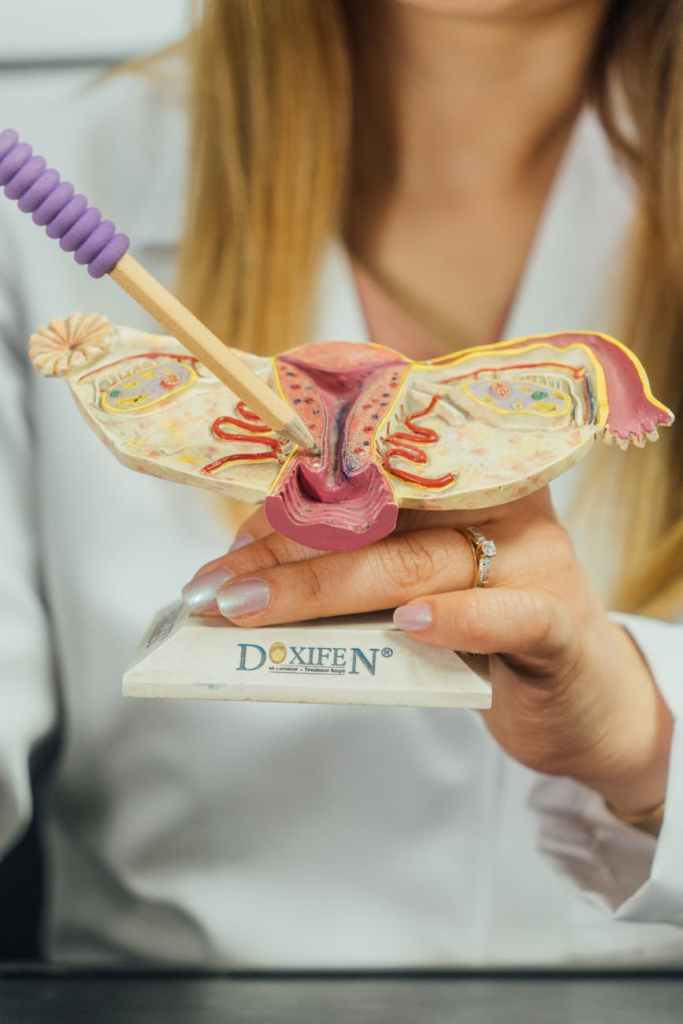
A tool called a speculum is placed into the vagina so that the cervix can be visualized for lesions. It is important to know that not all abnormalities are visible to the naked eye, so even if the cervix looks normal you can still have abnormal results. Once the cervix is visualized the provider brushes the cervix to collect the cells. Sounds easy right? Well, I’m going to be honest it can be uncomfortable. You can help yourself by being as relaxed as possible and by laying all the way towards the edge of the table. If you feel like you are halfway off the table, you are in the right spot. The more relaxed and lower you are on the table the more that helps to push your cervix closer towards the provider. When we tense up or are too high up in the table the cervix retracts. I usually invite patients to play a game on their phone, listen to music, or we just chat during, so it takes some of the nerves away.
Can the test be performed at any time?
Technically yes, but the following instances are not recommended. If you are on your period (heavily) the pap smear cannot be completed. Usually if there is just light spotting that is fine so just be aware of that. Recent intercourse or douching (which is not recommended) can sometimes affect the results.
And now, the waiting game. It can take about 2-3 weeks for the results to come back. It all depends on the lab your clinic uses and when your provider reviews the results. But since we can all see our results as soon as they come in which is often before the provider can (remember we do not work 24/7) I think we need to also discuss what the results mean.
The Results…What Exactly do They Mean?
Unsatisfactory
This just means that not enough cells were collected at the time of the testing and the testing needs to be repeated. The testing should be repeated at a maximum up to four months after the initial test.
Negative for Intraepithelial Lesion or Malignancy (NILM)
This is a normal result.
Atypical Squamous Cells of Undetermined Significance (ASC-US)
The short explanation is the cells look different at the time the pap smear was collected. This is usually caused by low grade HPV. It is typically expected to clear on its own.
Low-Grade Squamous Intraepithelial Lesion (LSIL or LGSIL)
These are mild cervical changes that are also expected to clear on their own.
High-Grade Squamous Intraepithelial Lesion (HSIL or HGSIL)
These changes are more moderate to severe changes to the cervix that can lead to precancerous or cancerous cells.
Atypical Squamous Cell, cannot exclude high grade squamous intraepithelial lesion (ASC-H)
These are abnormal appearing cells, but it is not clear if there are higher grade cells present, the results are suspicious for the presence of high-grade cells.
Atypical Glandular Cells (AGC)
Abnormal cells found inside the cervix (endocervix); this can be an indication for precancerous cells.
And lastly, what exactly is HPV (human papilloma virus)?
If you think of how we can have cold viruses and we can be sick at times, but not always…that is what HPV is. It is a virus that is on your cervix and is a sexually transmitted infection. It is not always present like a cold but can come and go. Because HPV comes and goes there is no way of knowing when you were exposed to the virus initially.
There are many kinds of HPV and not all of them lead to cancer, but the pap smear is how we can detect abnormal cells earlier.
What Happens Next?
It depends on the results. As I said at the beginning depending on your age, if you have a normal result, your testing is every 3 to 5 years.
If you have an abnormal result, it depends on what the abnormal finding is. For lower grade abnormalities such as ASC-US the next step for you may be to repeat your pap smear in 1-3 years.
For moderate to severe findings, a colposcopy, a loop electrosurgical excision procedure (LEEP), or a cone biopsy will be recommended.
Colposcopy vs. LEEP/Cone Biopsy

A colposcopy is another screening tool to determine the severity of the pap smear results. This procedure starts off very similar to the pap smear with a speculum inserted into the vagina to view the cervix. The difference is, the cervix will be cleaned with a vinegar solution and then your cervix is viewed under a colposcope (think big microscope). That vinegar solution turns anything that may be abnormal white. If this occurs, a biopsy of that area is taken. The second part of a colposcopy is an endocervical curettage (ECC), this is a small tool used to take a sample of the inside of the cervix. If you need a visual, the cervix looks like a donut. If nothing appears abnormal on the outside of the donut, no biopsy needs to be taken, however the ECC sample will still occur to rule out abnormality of the inside of the donut. This is a procedure that can also be done in pregnancy, minus the ECC. If you have a colposcopy during pregnancy, you will most likely need to repeat the procedure postpartum so that the ECC portion can be performed.
If the results of the colposcopy are normal, follow up entails a yearly pap smear for two years. If both of those results are normal, you can return to normal screening guidelines.
If the results of the colposcopy are abnormal, you will either repeat the pap smear in one year or treatment will be recommended which is the LEEP procedure or cone biopsy.
A LEEP is generally recommended if someone has high grade cervical changes or if someone repeatedly has positive HPV testing at each pap smear.
If your office has the capability the procedure can be done in the office setting, however if you do not think you will be comfortable in the office, you can request that the procedure is done in the hospital (you would be asleep with general anesthesia).
Again, this procedure starts off just like the pap smear. This time you will have local anesthesia so that you do not feel any pain (you will still feel touch) and then the cervix is viewed with the colposcope. From there, a thin electrified loop is used to remove the portion of the cervix that is sick. This would mean that your cervix is shorter than your normal. If you are still within childbearing age, you will be given an option of close monitoring or to go directly to treatment with the LEEP (depending on the severity). This procedure does not prevent or alter your ability to get pregnant (remember your ovaries are what control your fertility), but it does mean that future pregnancies need to be monitored more closely. In a pregnancy your cervix should be long; towards the end of the pregnancy the cervix shortens to prepare for delivery. When someone has a LEEP, they are starting off the pregnancy with an already shortened cervix, meaning you could be at risk for preterm labor/delivery and cervical stenosis (this could make it harder for your cervix to dilate once it is time for delivery).
**This is not said to deter you from getting treatment. If you have moderate to high grade changes, I definitely recommend treatment. This is information so that you can consider your options of closer monitoring vs. treatment and just so that you are aware of the risks. This also does not mean that these things will happen to you if you get treatment. Just to provide awareness, your provider should also be educating you with this information so that you can make the right decision for yourself.
A cone biopsy is similar to a LEEP however this is performed in the hospital and uses a scalpel to get to hard-to-reach abnormal areas.
Gardasil, the HPV vaccine
When I used to work in family practice, I would often hear that “my child is not having sex, they don’t need to get this vaccine” I get it we don’t want to think of our kids in that way. However, this isn’t about the vaccine causing our kids to be sexually active. It is about being ahead of the exposure to HPV. The vaccine does not protect you from all forms of HPV as there are many (warts on hands/feet are a form of HPV), but it does help to protect you from the high-risk strains that can lead to cancer. Gardasil is not only protecting you from cervical cancers, but is also protecting you from vaginal, anal, penial, throat, and vulvar cancers. It can be given as early as 9, however I would recommend when you are ready to discuss what the vaccine is for, get the vaccine for your child at that time. This vaccine can be given until the age of 45. If you are under 14, it is recommended that you get 2 doses; for ages 15-45, 3 vaccines given over 6 months is what is recommended. Even if you have already been sexually active, I would still recommend getting this vaccine.
I have had many patients that have had abnormal pap smears tell me that they received treatment by getting the HPV vaccine. I want to be clear, treatment for cervical abnormalities are a LEEP or cone biopsy. The vaccine is not treatment but is for prevention of the high-risk strains of HPV.
You can also help to reduce your risk of HPV with condom use, smoking cessation, and reducing the number of partners you may have at one time.
If you would like more information on cervical cancer screening and results, google the ASCCP patient information pages, it has wonderful information that is easy to understand.
Remember going to the doctor does not cause you to find problems but rather to be preventative, care for yourself, and hopefully catch any issues before it is too late for treatment.

Leave a comment